City2Surf Countdown: How to Fix Niggles Fast With One Month to Go

The excitement is building! With the City2Surf just over a month away, many runners are increasing their training intensity — pushing harder, running more often, and chasing that PB. This dedication is fantastic, but it also means one thing:
Niggles start showing up.
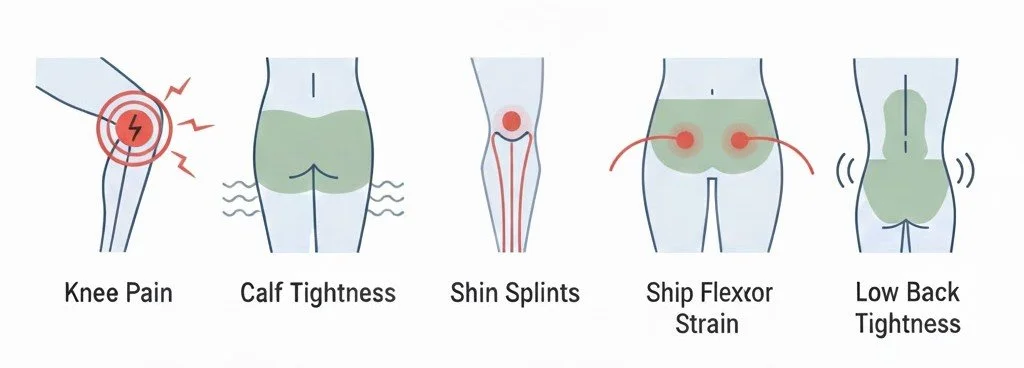
A tight calf…
A sore knee…
A cranky hip flexor…
Sound familiar?
With only weeks to go, the last thing you want is for a minor ache to turn into a race-day-ruining injury. The good news? Most niggles can be managed early with smart training adjustments.
Below are the key strategies runners can use to stay injury-free and reach the City2Surf start line feeling strong.

How to Manage City2Surf Niggles in the Final Month
If you're starting to feel a bit off – a twinge in your knee, tightness in your calf – don't ignore it. Here are some key strategies to help you navigate these "niggles" and ensure you reach the City2Surf starting line feeling strong and ready to conquer those 14 kilometres:
1. Reduce Intensity — Not Fitness
Your training plan likely includes high-intensity intervals or tempo runs to boost your speed and stamina. While these are important, if you're feeling a niggle, it's time to ease off the gas.
Replace some high-intensity sessions with easier runs at a conversational pace. You should be able to comfortably chat with a running buddy during these runs.
Reduce the duration of your high-intensity workouts. If you were doing 4 x 800m intervals, scale it back to 3 x 400m intervals.
2. Prioritise Recovery Over Volume:
Training volume is crucial for building endurance, but right now, your body needs a chance to recover from those niggles.
Replace a few runs with low-impact cross-training:
Swimming
Cycling
Elliptical
Aqua jogging
These help maintain cardiovascular fitness without extra joint stress.
And yes — an extra rest day is sometimes the best training day.
3. Run on Softer Surfaces
Concrete and pavement create repetitive stress that amplifies niggles.
Where possible, choose:
Grass ovals
Dirt trails
Athletics tracks
Even 1–2 softer runs per week can significantly reduce impact forces.
4. Rest is Your Best Friend:
Recovery = repaired tissue.
Aim for:
7–8 hours of sleep nightly
Minimising late-night screens
Light stretching before bed
Your muscles recover while you rest, not while you run.
When Should You See a Physio Before City2Surf?
If your niggle:
✔ Has lasted more than 3–4 runs
✔ Is getting worse
✔ Causes limping or sharp pain
✔ Stops you from completing your planned sessions
…then it’s time to get assessed.
A Physiotherapist or Exercise Physiologist can:
Diagnose the true source of the niggle
Provide targeted exercises
Correct your running mechanics
Prevent a small problem becoming an injury
Most issues are fixable quickly when treated early.
Don’t Let a Niggle Become a Race-Day Disaster
You’ve trained hard — don’t let a small ache take you out of City2Surf.
If you’re experiencing knee pain, calf tightness, shin splints, or hip discomfort, Movement Therapy EP can help you stay on track and reach the start line confident, strong, and pain-free.
Book your City2Surf injury check-up with Movement Therapy EP today and keep your training on track.
FAQs
-
If you notice niggles such as calf tightness, knee pain, or hip discomfort before City2Surf, reduce your training intensity, switch some runs to low-impact cross-training, and allow more recovery. If symptoms persist, book an assessment with Movement Therapy EP to prevent the issue from developing into an injury.
-
You can continue training with mild discomfort, but avoid pushing through sharp pain, swelling, or symptoms that worsen during your run. Adjusting your load and running surface can help, but it’s safest to have the niggle assessed by a physio or Exercise Physiologist to avoid further injury.
-
To prevent injuries, focus on smart load management: reduce speed work, add rest days, run on softer surfaces, maintain proper hydration, and ensure you’re sleeping at least 7–8 hours per night. Professional guidance from Movement Therapy EP can help tailor your training and prevent common overuse issues.
-
See a physio if your niggle lasts more than 3–4 runs, gets worse with activity, affects your gait, or stops you from completing your planned sessions. Early intervention from Movement Therapy EP can resolve most problems quickly and help you reach the start line strong and pain-free.