Do You Have to Track Calories Forever?
Calorie tracking can teach you a lot.
You begin to understand portion sizes, recognise patterns in your eating and discover how different foods contribute to your overall energy intake.
But does that mean you need to spend the rest of your life weighing everything you eat?
I don’t think so.
In fact, I believe one of the most valuable things calorie tracking can teach you is how to eventually become less dependent on it.
My experience with calorie tracking
When I was losing weight, calorie tracking became an important part of my journey. I used MyFitnessPal for years, and for almost two years I weighed and tracked nearly everything I ate.
I became pretty good at it.
I understood portion sizes, calorie density, macronutrients and how different foods could fit within my overall intake. I learnt how easily things like cooking oils and sauces could increase the calories in a meal.
But I also learnt something equally important. Foods I previously thought were incompatible with weight loss weren’t necessarily a problem.
I could enjoy a burger, takeaway or dessert and still make progress. It wasn’t about eliminating everything I enjoyed. It was about understanding how those foods fitted into the bigger picture.
That knowledge gave me flexibility.
But eventually, I started questioning whether I wanted to keep weighing and tracking everything indefinitely.
Learning to put the food scales away
After nearly two years of weighing and tracking almost everything I ate, I stopped cold turkey.
And I’ll admit, it took some adjusting.
My weight bounced around as I tried to find a balance between the structure I’d become used to and eating more mindfully. I was learning to trust my judgement without needing to put everything on the kitchen scales.
And I’m still learning.
My weight can still creep up at times, and occasionally I’ll return to tracking to help me understand what’s happening and reinforce some of the habits that have slipped.
Sometimes I’ll weigh and track a day’s food because I’m curious about how much I’m actually eating. Sometimes I’m making a new recipe and want to understand its nutritional content. And sometimes I just want to double-check that my portions are roughly where I think they are.
I don’t see that as returning to dieting. I see it as using a tool.
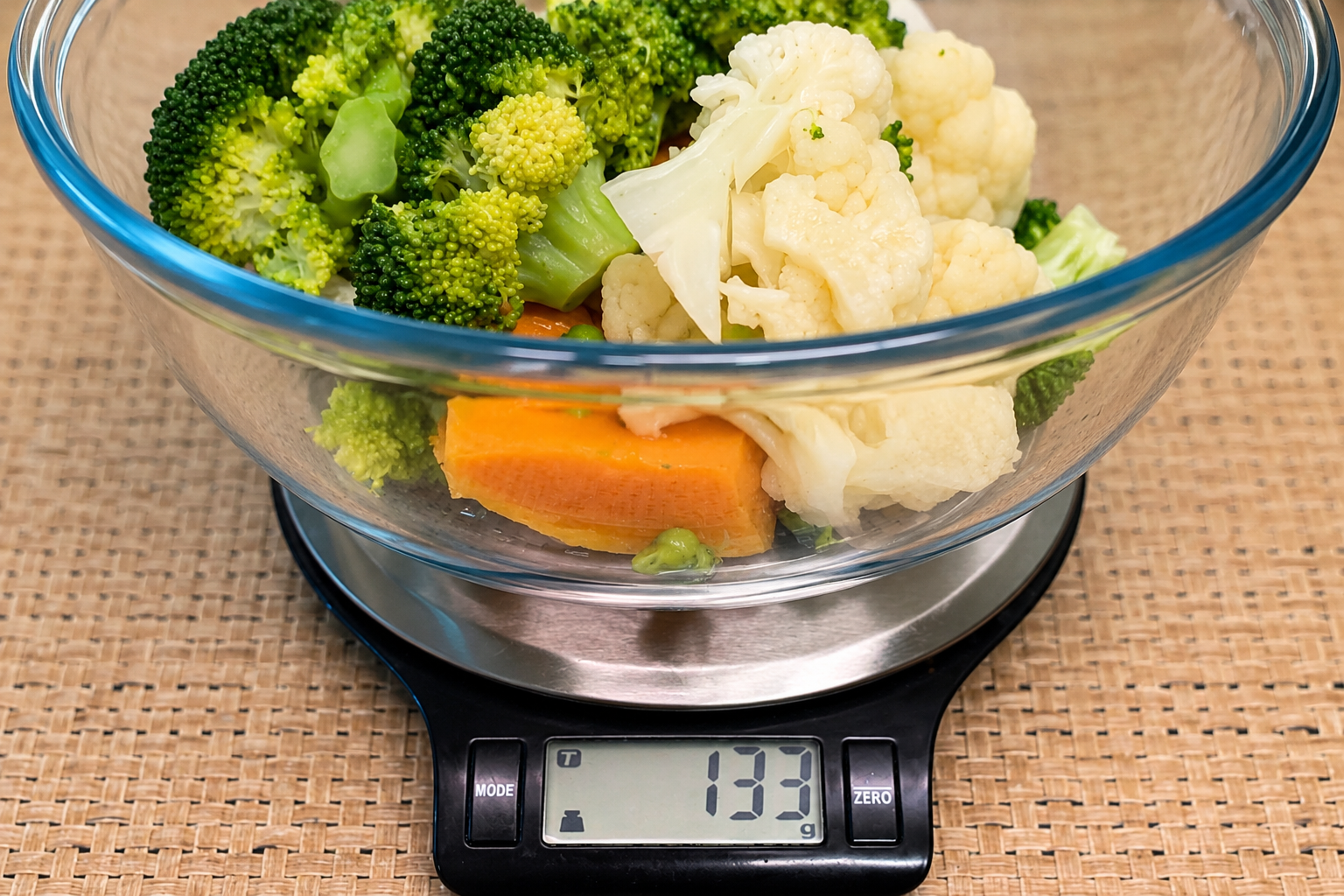
My food scales are a kitchen utensil, just like my measuring cups or chopping board.
They’re there when I need them, but I don’t need to use them every time I prepare a meal.
That’s where I want to be with calorie tracking. Not avoiding it completely, but not depending on it every day either. It’s something I can pick up when it’s useful, then put away again.
Tracking is a tool, not the goal
As a sports nutritionist, I still believe calorie tracking can be incredibly useful, particularly when someone is trying to understand their current eating habits or why their weight isn’t changing as expected.
Sometimes what we think we’re eating and what we’re actually eating can be quite different. Tracking can help identify those differences.
But I don’t believe everyone needs to track calories to improve their nutrition or lose weight. And I certainly don’t believe everyone needs to do it forever.
For some people, tracking provides useful structure and education. For others, it creates unnecessary stress, guilt or an unhealthy level of attention around food.
Neither experience should be ignored.
The purpose of tracking should be to help you make better decisions, not to make you feel incapable of eating without it.
Learning to eat without tracking everything
I think this is where we need to change how we approach calorie tracking.
Rather than seeing it as something you either do perfectly or abandon completely, we can treat it as a skill that evolves.
At first, someone might benefit from weighing and recording their meals to understand their usual intake. Over time, they begin recognising portions and understanding how to build meals that support their goals. Eventually, they may find they can make those decisions without recording everything.
For example, instead of calculating the exact calories in your lunch, you might recognise that a meal with a good source of protein, plenty of vegetables, some carbohydrates and enough fat for flavour and satisfaction generally works well for you.
You might have a regular breakfast that you know keeps you full. You might become more comfortable adjusting your portions based on your hunger, activity and goals.
You’re still using what you’ve learnt. You’re just applying that knowledge without needing to calculate every decision.
And I think there’s something valuable in learning to be present when we eat, paying attention to the meal and noticing when we’re becoming satisfied. That’s a skill worth exploring in its own right.
You can still check in
One thing I want to make clear is that moving away from calorie tracking doesn’t mean abandoning awareness.
Checking in with yourself is still important. That might mean monitoring your weight trends, taking occasional measurements, reflecting on your eating habits or noticing changes in your energy and training performance.
And sometimes, returning to calorie tracking for a while can be useful.
Maybe your weight has been increasing and you’re not sure why. Maybe your routine has changed, your portions have gradually grown or you’ve started eating differently.
Tracking a day of eating might give you some clues. If you’re trying to understand a longer-term pattern, looking at several typical days can give you a clearer picture.
That doesn’t mean you’ve failed at eating without tracking. It just means you’re using a tool when it’s useful.
You wouldn’t keep measuring every ingredient in a recipe you’ve cooked hundreds of times. In the same way, you don’t need to measure every meal forever.
But the measuring tools are still there when you need them.
What if you prefer tracking?
There’s nothing wrong with that either.
Some people genuinely enjoy tracking their nutrition. They like having clear targets, seeing the numbers and using that information to support their goals.
If tracking fits comfortably into your life and doesn’t negatively affect your relationship with food, there’s no reason you have to stop.
The important distinction is whether tracking is something you choose to do because it’s useful, or something you feel unable to stop doing. Those are two very different situations.
And if tracking consistently creates anxiety, guilt or distress around eating, it may be worth stepping away from it and seeking appropriate professional support.
Building confidence without perfect information
One of the biggest lessons from my own weight loss journey has been learning that I don’t need perfect information to make good decisions.
I don’t need to know the exact calories in every restaurant meal. I don’t need to weigh every ingredient. And I don’t need every day to look identical.
I can use the knowledge I’ve built up to make decisions that generally support my goals while still enjoying food and getting on with everyday life.
That doesn’t mean I always get it right. Sometimes my habits slip. Sometimes my weight increases. And sometimes I need to pay closer attention again.
But I have the skills to recognise those situations and respond. And if that means getting the food scales out for a few days to reinforce some of my habits, I’m comfortable doing that.
They’re a tool in my kitchen, not something that needs to control my life.
That’s what I want calorie tracking to help people develop. Not a lifelong dependence on numbers, but the confidence to make informed decisions without always needing them.
The goal isn’t to become perfect at tracking calories. It’s to become confident enough with your nutrition that tracking becomes a choice rather than a requirement.
And for me, that’s a much more sustainable way to live.
Eat. Enjoy. Empower.