What Happens When You Reach Your Goal Weight?
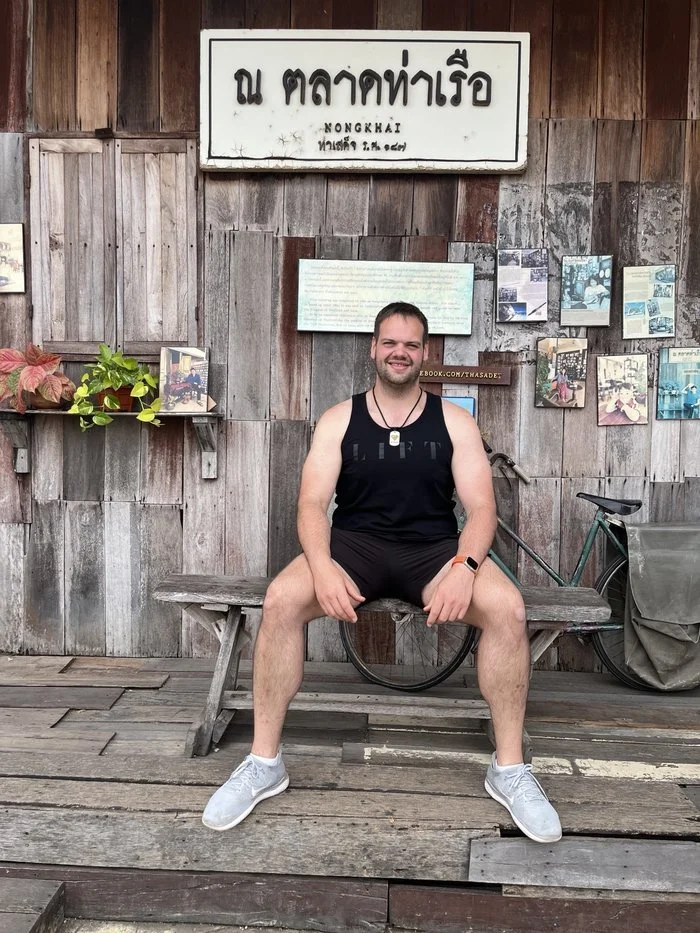
Dean Stephens enjoying a holiday in Thailand.
For years, I imagined reaching my goal weight would be the moment everything became easy.
I'd finally become the healthy person. I'd know how to eat. I'd exercise regularly. My weight would stay exactly where I wanted it.
And presumably, I'd spend the rest of my life calmly eating appropriate portions of Greek yoghurt.
Unfortunately, that's not quite how it works.
When you're losing weight, there's usually a destination. Maybe it's a number on the scales, a clothing size or a particular waist measurement.
You work towards it, sometimes for months or even years.
But what happens when you finally get there?
The finish line that isn't really a finish line
One of the biggest things I've learnt through my own weight loss journey is that losing weight and maintaining weight require different skills.
When you're losing weight, you generally have a fairly clear objective. Create a calorie deficit, establish useful habits and gradually work towards your goal.
Maintenance is different.
You're no longer trying to continually make the number smaller. You're trying to find a way of living that supports the progress you've made.
And that can be surprisingly uncomfortable.
After spending so long controlling my food, eating more felt strange. Relaxing my structure felt strange. Not constantly chasing another kilogram felt strange.
I'd spent years learning how to lose weight.
Now I needed to learn how to stop losing it without returning to where I started.
Life doesn't stop when the diet ends
This was something I hadn't really considered.
When I imagined maintaining my weight, I imagined everything staying relatively consistent.
But life isn't consistent.
Work gets busy. Christmas happens. You go on holiday. Your exercise routine changes. You have periods where nutrition is a priority and others where it takes a back seat.
And that's completely normal.
One experience that challenged my thinking was travelling to Thailand for six weeks after losing weight.
For years, a holiday like that would have terrified me.
Not because of the travelling, but because of the food.
What would I eat? How much weight would I gain? Could I trust myself without my usual routine?
But this time, I wanted to experience the holiday.
Thailand has incredible food. Street food, restaurants, markets and things I'd never tried before.
I didn't want to spend six weeks trying to calculate the calories in every meal.
I wanted to enjoy myself.
And I did.
What happened when I got home
When I returned from Thailand, I'd gained weight. More than I'd expected, actually.
And I was frustrated.
I'd lost weight on a previous holiday, so part of me felt like I'd somehow done something wrong this time.
But when I reflected on the holiday, I asked myself whether I'd change anything.
And the answer was no.
I'd enjoyed the food, the experiences and the freedom of being on holiday.
That didn't mean I was suddenly comfortable with the weight gain. I'm still not always comfortable with it today.
It's something I've had to practise, and something I still remind myself of.
When I notice the scales climbing, that old frustration can creep back in. But I'm getting better at recognising it, reflecting on what's happened and remembering what I already know.
I don't need to punish myself or start another extreme diet. I need to return to the habits that helped me in the first place.
And when I do that consistently, my weight generally settles back down over time.
Sometimes it takes longer than I'd like. Especially when I've enjoyed the holiday a little more than expected!
I think that's an important part of maintenance that doesn't get talked about enough.
You don't necessarily become someone who never struggles with their weight again. You become someone who gets better at responding when things don't go to plan.
And hopefully, with enough practice, those responses become more natural.
Not immediately. Not perfectly. But gradually.
Your weight won't stay exactly the same
Another thing worth understanding is that maintaining your weight doesn't mean protecting one particular number forever.
Your body weight naturally fluctuates.
Hydration, food volume, carbohydrate intake and plenty of other factors can influence what appears on the scales.
That's why I prefer thinking about maintenance as a comfortable range rather than a single number.
A range that reflects your health, your lifestyle and somewhere you feel comfortable.
If your weight moves within that range, it doesn't automatically mean something needs fixing.
And if it starts moving consistently beyond it, you have an opportunity to look at what's changed.
Not panic.
Just pay attention.
You don't have to abandon everything that worked
Something I think gets overlooked is that the habits you developed while losing weight can continue supporting you afterwards.
Eating breakfast.
Including plenty of plants and protein.
Walking regularly.
Finding exercise you enjoy.
Getting enough sleep.
Having some structure around your meals.
These aren't simply things you do to lose weight. They're useful habits regardless of what the scales are doing.
The difference is that you can become more flexible with how you apply them.
Maybe you don't need to track every calorie anymore.
Maybe you can eat out more often without worrying about making everything fit perfectly.
Maybe your training becomes less about burning calories and more about enjoying what your body can do.
The aim isn't to abandon structure.
It's to develop enough confidence that structure no longer needs to control your life.
Start practising maintenance before you reach your goal
If there's one thing I'd encourage people to consider, it's that you don't need to wait until you've reached your goal weight to start developing maintenance skills.
You can practise flexibility while you're still losing weight.
Go out for dinner.
Enjoy a birthday.
Have the dessert.
Take a holiday.
Learn how to return to your usual routine afterwards without punishment or compensation.
These experiences aren't distractions from your progress.
They're opportunities to develop the skills that will help you maintain it.
Because eventually, the goal is to live without feeling like you're permanently on a diet.
The real achievement
I used to believe that reaching a particular number would be the achievement.
And don't get me wrong, losing weight can be an enormous achievement. I'm proud of what I've accomplished.
But over time, my perspective changed.
The real achievement wasn't simply losing 56 kilograms.
It was learning how to enjoy food again. How to travel. How to eat at restaurants. How to recognise when my habits needed attention without feeling like I'd failed.
And perhaps most importantly, learning that I don't have to get everything right to keep moving forward.
I'm still learning that.
There are still moments when the scales frustrate me. There are still times when I need to remind myself of the very things I encourage other people to practise.
But I think that's part of the process.
Losing weight changed my body. Learning how to maintain it continues to change my relationship with food.
And that's why I think maintenance deserves just as much attention as weight loss itself.
Because reaching your goal weight shouldn't mean spending the rest of your life afraid of losing your progress.
It should mean having more freedom to enjoy the life you've been working towards.
Eat. Enjoy. Empower.